IFRS 9 accounting
Amortised cost, fair value through profit or loss or OCI; the fair-value hierarchy; expected credit loss in stages; reclassification with its effects posted.
Every investment from decision to exit, accounted for and valued in the same system as the group accounts: subsidiaries, associates, joint ventures, listed shares and funds. The portfolio, the register and the statements finally agree.
What it does
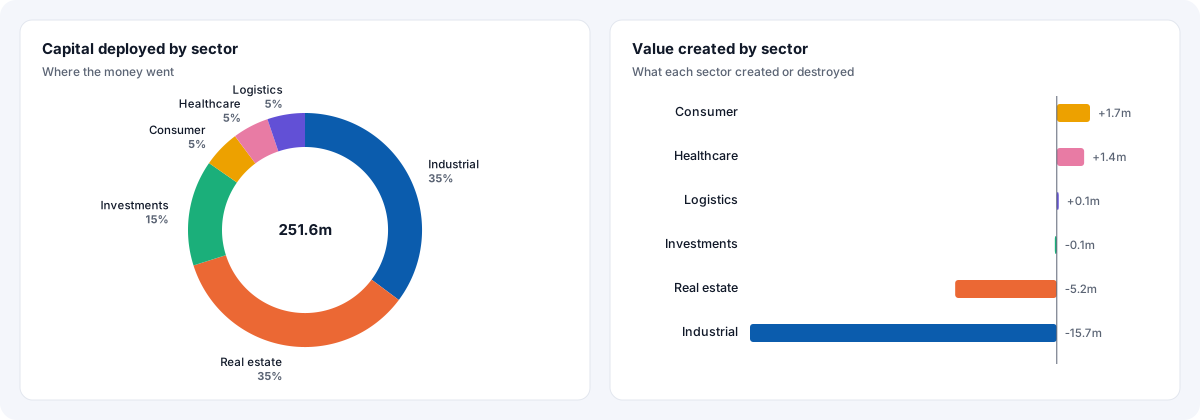
Where the money went and what it created, by sector, class, country or strategic and financial portfolio. Select a group and every investment in it is listed, ranked, against its target.
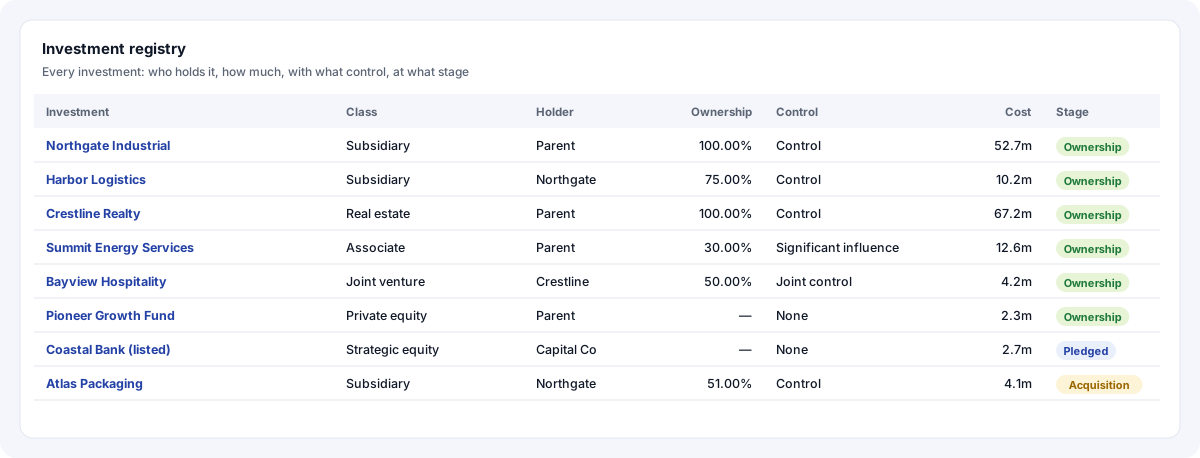
Every investment with its class, objective, sponsor, target return and holders, its lifecycle stage, and the committee decisions behind it. Pledged holdings say so.
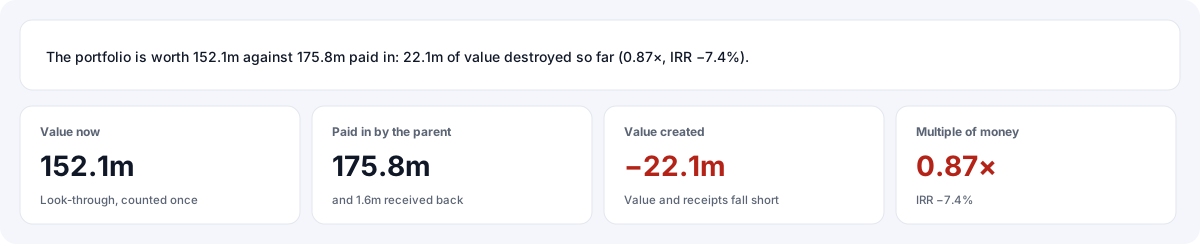
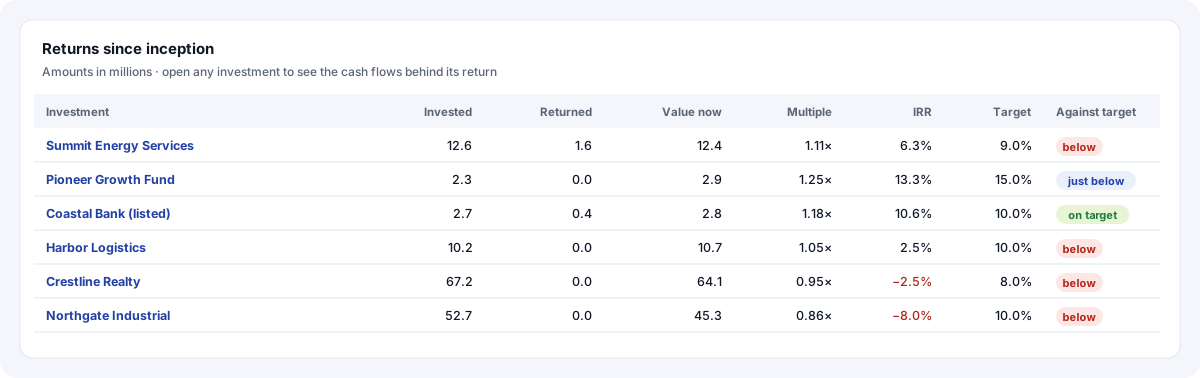
Money invested and returned, value now, multiples and IRR since inception, year to date or this month, in group or local currency. Open any investment to see the cash flows behind its return.
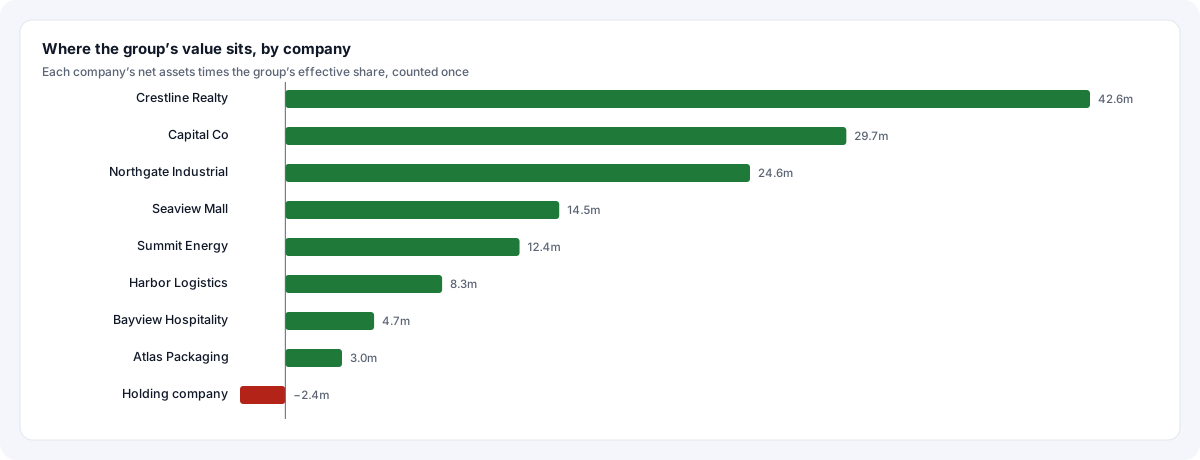
Everything the parent owns through every holding, counted once: economic interest by company, exposure by asset class, country, currency and sector, and every ownership path.
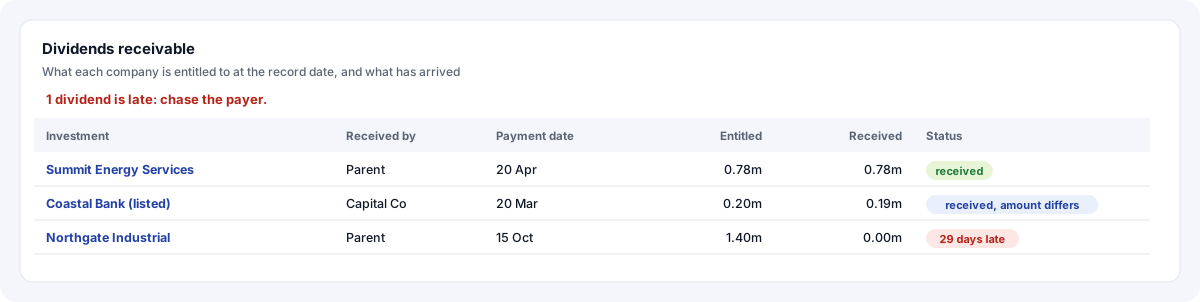
Declarations, entitlements at the record date and receipts against what was due. A late or short dividend is flagged; intercompany dividends are eliminated on consolidation.
Amortised cost, fair value through profit or loss or OCI; the fair-value hierarchy; expected credit loss in stages; reclassification with its effects posted.
The equity method from the investee’s own results: share of profit, dividends and impairment, flowing into the consolidation.
Prices from feeds, files or by hand, checked and approved before use; internal and lender valuations for unlisted holdings.
Rights issues, bonus shares, splits and mergers with election deadlines; holdings, costs and pledges follow the action.
On the platform
Investment committee decisions recorded with their thesis, and portfolio companies' value-creation plans tracked in the Value Ledger against the returns they actually deliver.
How the platform fits together →A working session on your own entities, intercompany and investments, in English or Arabic. You keep whatever comes out of it.