
Cash and banks
Balances across companies and currencies, in group currency with a total that ties to the accounts; stale balances flagged.
A group view of cash, debt, covenants and security, on the same numbers as the consolidated accounts. Risks show early, while there is still time to refinance, top up security or ask for a waiver.
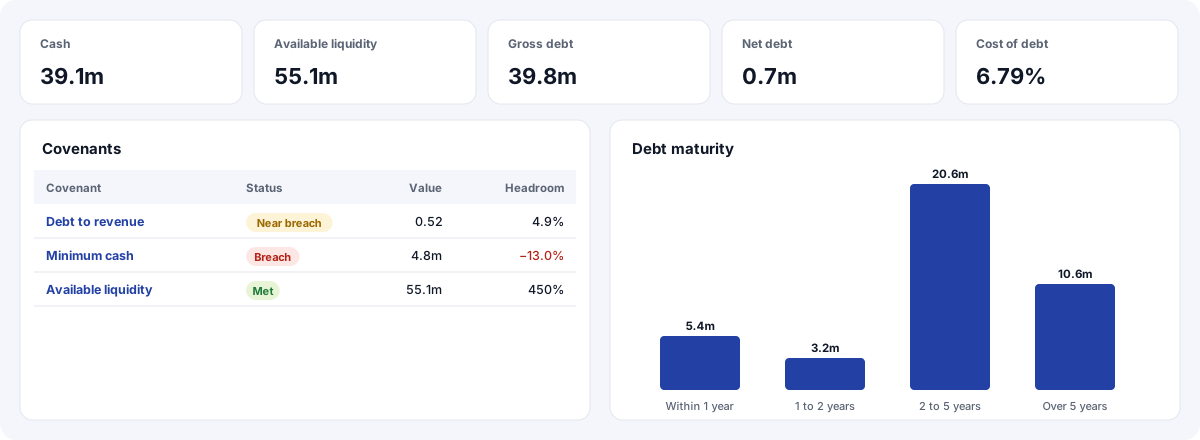
What it does
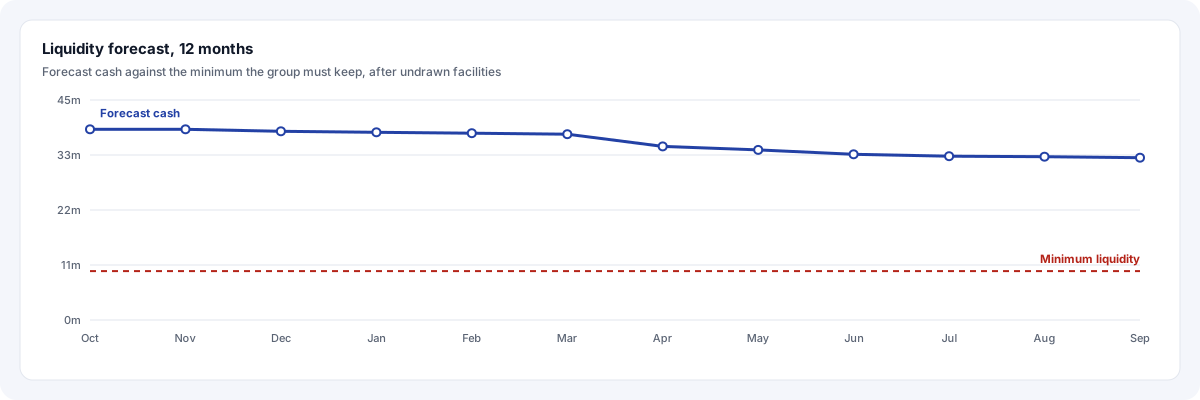
Forecast cash against the minimum the group must keep, with undrawn facilities counted and the headroom month by month, so a shortfall shows while there is time to act. Put it under pressure (receipts later or lower, payments higher) and see the month it would fall short; and see how close past forecasts came to the cash there was.
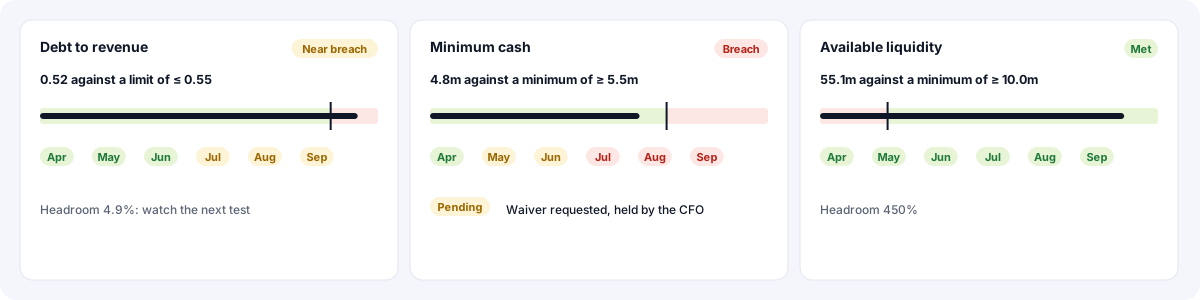
Every covenant tested on the consolidated figures when the close reaches review: value, limit, headroom, the warning band and the trend. A waiver is requested from the covenant itself and approved by the CFO.
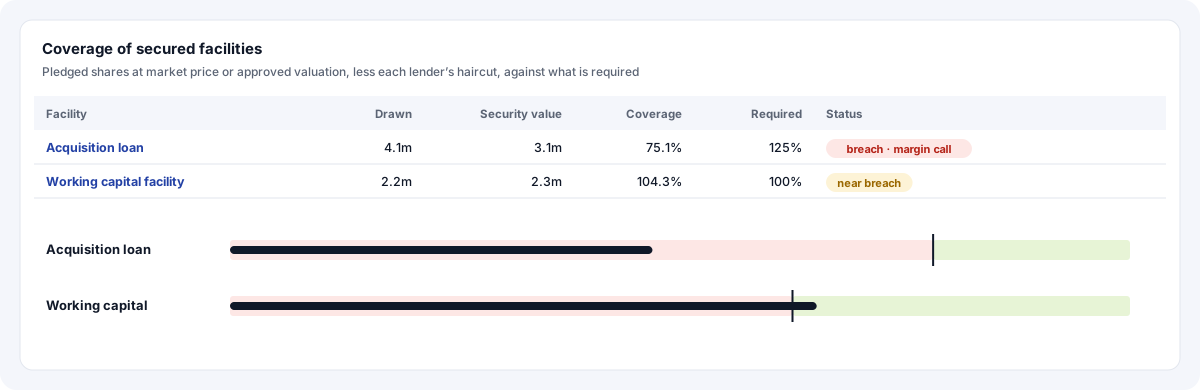
Shares and assets pledged to lenders, valued at market price or approved valuation less each lender’s haircut, against what each lender requires. Breaches alert treasury, the controller and the CFO.
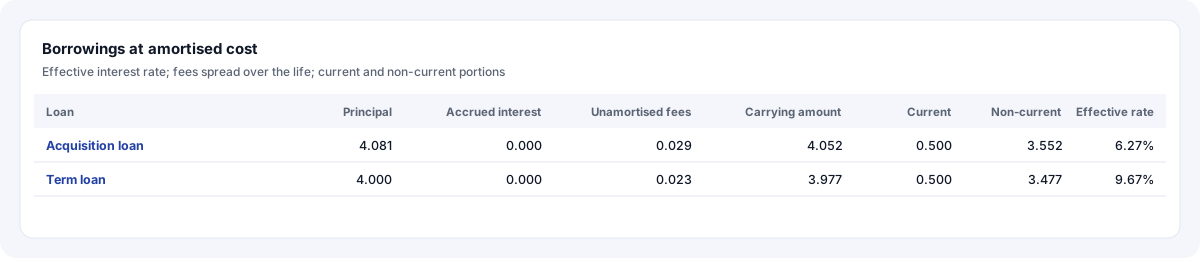
Term loans at the effective interest rate, with fees spread over the life, accrued interest, and the current and non-current split the statements need.
Balances across companies and currencies, in group currency with a total that ties to the accounts; stale balances flagged.
Limits in their own currency, drawn and undrawn in group currency, and how much of each facility is used.
When the debt falls due, by year band and by lender, with the repayments behind each bar.
Covenants, liquidity, refinancing, security cover and currency in one strip, on Mission Control for the CEO.
Each company's cash in its books against its bank statements, loaded from the banks' own files. A difference is explained by reconciling items that carry forward until they clear.
Loans between group companies with their interest schedule, checked against both companies' books, so the side that booked differently shows before approval.
Forwards and interest rate swaps with the bank's month-end valuation, against the currency exposure and the floating-rate debt they cover.
Who may sign on each account, alone or jointly, up to what amount and until when; accounts without a signatory or with a mandate about to end are flagged.
Built for holding companies
Treasury and investments are part of Consolidate360: shares held in the portfolio are often the security behind the group's borrowings, and the two have to agree with the group's accounts.
Investments →A working session on your own entities, intercompany and investments, in English or Arabic. You keep whatever comes out of it.